Artificial intelligence (AI) is often discussed as a software story, but it’s also a physical-infrastructure story. Every AI model depends on power, data centres, advanced processors, memory, storage, networking and, ultimately, applications that put intelligence to work.
That matters for investors because no single company or segment of the technology market captures the entire opportunity. As AI systems become larger and move from training into widespread inference, the pressure point can shift from one part of the value chain to another. More computing power can create demand for more electricity, more memory, faster data movement and greater storage capacity.
The launch of the Global X Artificial Intelligence Memory Index ETF (DRAM) and the Global X Asia Semiconductor Index ETF (ACHP) adds two focused building blocks to Global X’s broader AI lineup that now spans eight ETFs.
DRAM targets an increasingly important but sometimes overlooked layer of the AI stack: the memory and storage technologies that keep processors supplied with data. ACHP provides access to the Asian semiconductor ecosystem that designs, manufactures and equips much of the world’s chip supply.
DRAM & ACHP: Different Exposures to the Same Buildout
DRAM and ACHP are connected but are not interchangeable. DRAM is organized around AI technology needs for memory and storage capacity across global markets. ACHP is organized to offer broader exposure to Asia’s semiconductor ecosystem – one of the world’s largest.
*Plus applicable sales tax
| THE CENTRAL IDEA: DRAM takes a global approach to AI’s need for memory hardware, while ACHP takes a targeted approach to Asia’s growing semiconductor market share and future potential. |
DRAM: Why Memory Matters for AI
An advanced processor can perform trillions of calculations, but only if it receives data quickly enough. When memory bandwidth cannot keep pace, the processor spends more time waiting and less time computing. This constraint is referred to as the memory wall, which can slow performance, drive up costs and ultimately, limit progress.
High-bandwidth memory (HBM) addresses part of that problem by placing large amounts of fast memory close to AI accelerators, but the opportunity is broader than HBM alone. Conventional server dynamic random-access memory (DRAM) provides working memory for CPU-based tasks, while NAND (which stands for Not AND, signifying it’s a basic digital logic gate) flash and enterprise solid-state drives store models, data sets, retrieval libraries and a growing volume of AI-generated content.
The transition from model training to inference can expand these requirements. Training needs extremely fast access to vast data sets. Inference, particularly longer-context and agentic applications, can require AI systems to preserve and retrieve more information across repeated steps.
In June 2026, Micron Technology reported that memory content per server had doubled over the previous three years, while AI context lengths were increasing rapidly. The company also expected industry data-centre DRAM and NAND bit shipments in 2026 to more than double from two years earlier.
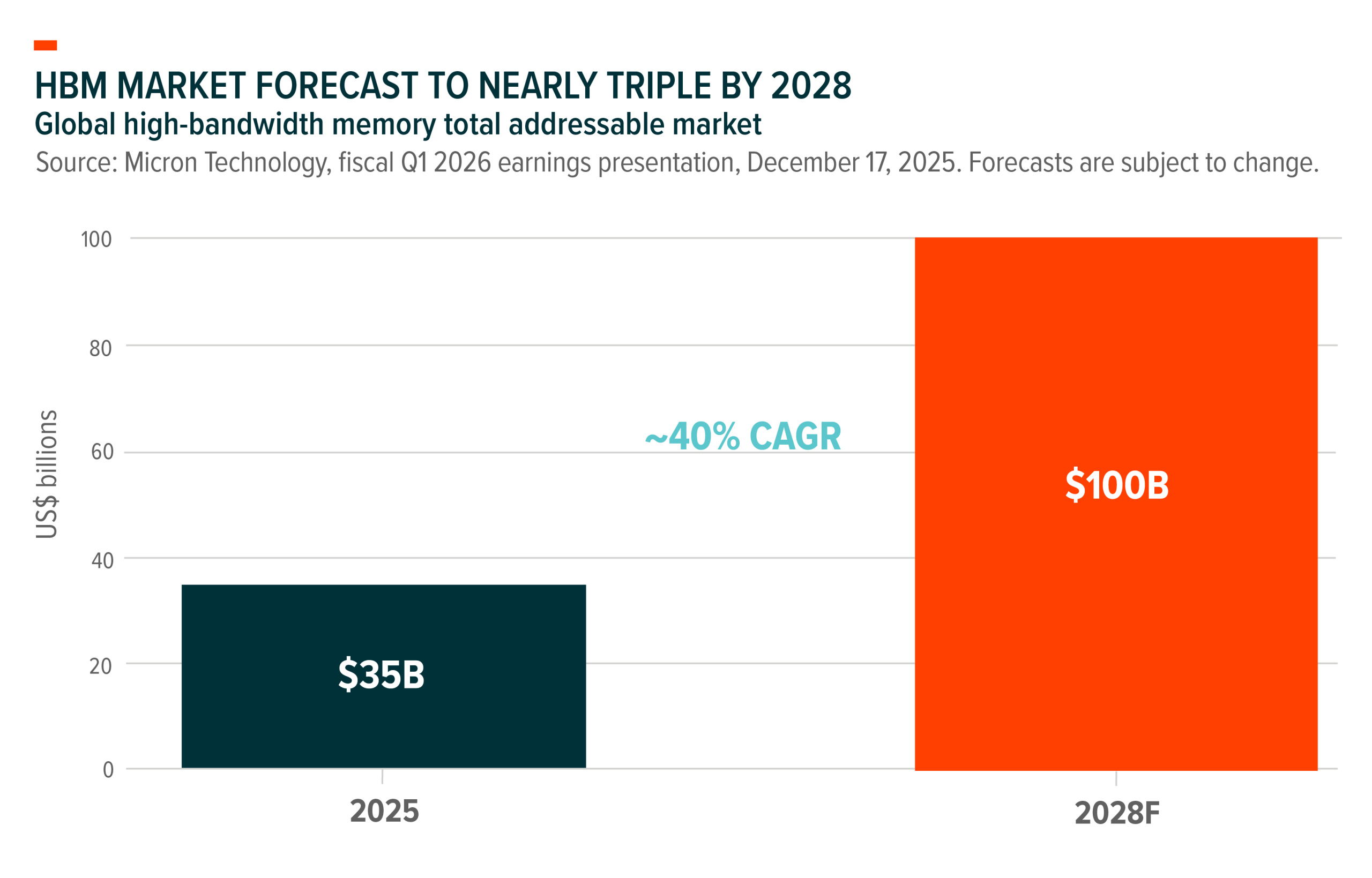
Figure 1. One industry forecast illustrates the potential scale of the HBM expansion.
Micron forecasts that the HBM market could grow from approximately US$35 billion in 2025 to around US$100 billion in 2028 — an approximately 40% compound annual growth rate. The data illustrates that memory is consuming a larger share of the economics surrounding AI infrastructure.
Manufacturing investment is responding as well. Industry association SEMI published its July 2026 outlook projecting DRAM equipment sales to rise from US$38.8 billion in 2026 to US$56.9 billion in 2028. NAND equipment sales were projected to increase from US$13.9 billion to US$20.8 billion over the same period.
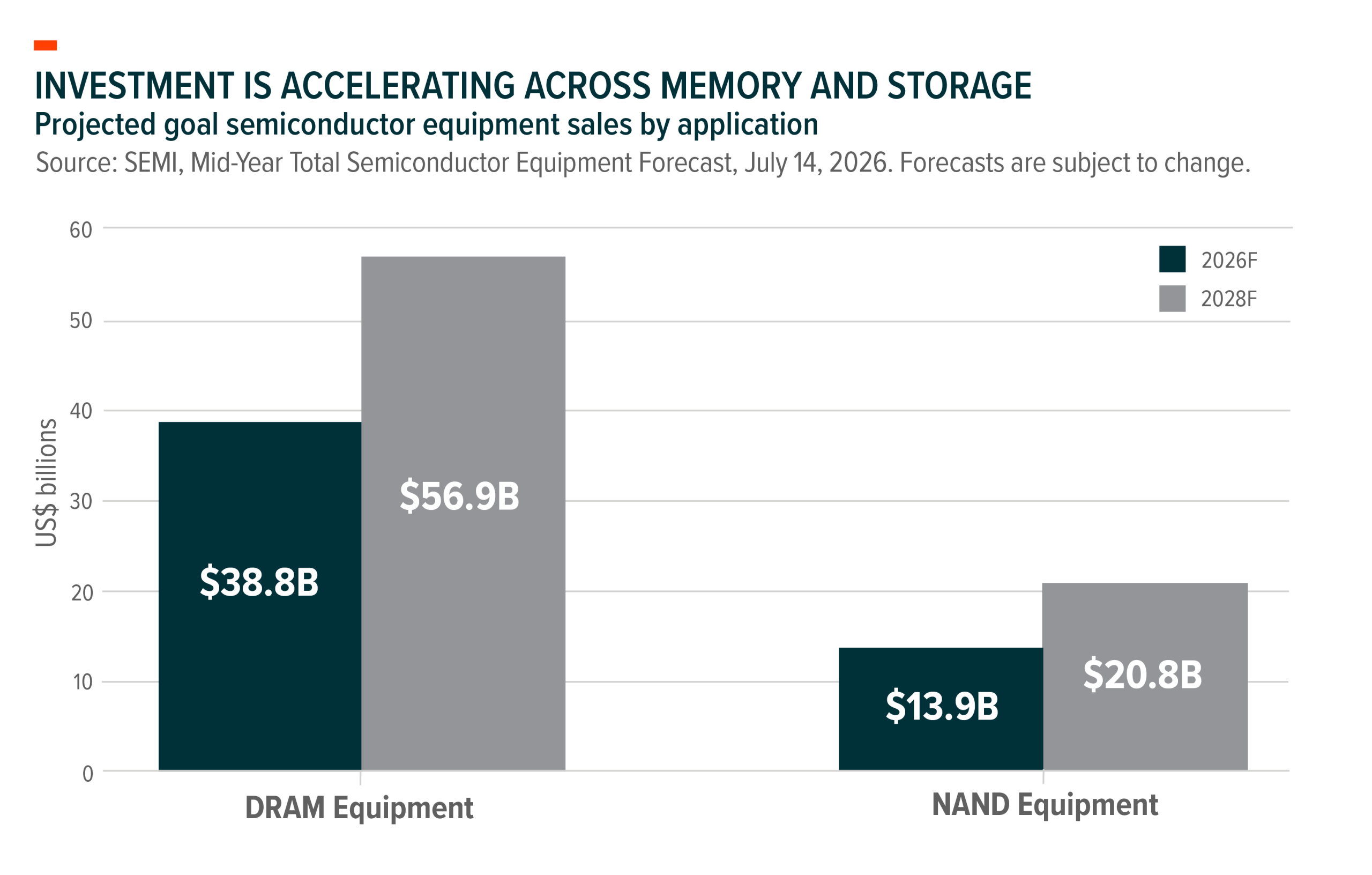
Figure 2. Memory investment is extending across both working memory and long-term storage.
What DRAM provides
The Global X Artificial Intelligence Memory Index ETF (DRAM) is designed to track the Mirae Asset Artificial Intelligence Memory Index (the “Index”). The Index targets leading companies involved in memory technologies and data-storage solutions supporting AI infrastructure, including HBM, DRAM and NOR flash memory as well as NAND flash, solid-state drives and hard-disk drives.
DRAM’s index includes exposure to companies across South Korea, the United States, Japan, Taiwan and China, including Micron Technology, Samsung Electronics, SanDisk Corporation, Seagate Technology and Shenzhen Longsys Electronics.
DRAM creates a focused way to access global businesses, addressing both sides of the challenge: moving data fast enough to keep AI processors working and storing the rapidly expanding volumes of information that AI systems use and create.
ACHP: Why Asia Remains Central to Semiconductor Manufacturing
The semiconductor supply chain is global but it is not evenly distributed. Chip architecture may be developed in one market, manufacturing equipment in another, wafers fabricated somewhere else and advanced packaging completed in yet another location. Across that chain, Asia remains a major centre of semiconductor manufacturing and related capabilities.
A 2024 Semiconductor Industry Association and Boston Consulting Group study estimated that China, Taiwan, South Korea and Japan together accounted for 76% of global commercial semiconductor fabrication capacity in 2022. The concentration was even greater in several strategically important categories, including leading-edge logic and memory.
The same study estimated that Taiwan and South Korea accounted for all sub-10-nanometre logic capacity captured by the data set in 2022. China, Taiwan, South Korea and Japan together represented approximately 97% of DRAM capacity and 90% of NAND capacity. Those figures also illustrate why semiconductor diversification takes time: the region’s position in the supply chain rests not only on individual fabrication plants but on dense networks of suppliers, engineers, equipment, materials and manufacturing expertise.
Governments and companies are investing heavily to make the supply chain more geographically resilient. That diversification is real, but it does not remove Asia from the centre of the next capacity cycle. SEMI’s regional forecast for 2026 through 2028 placed China, South Korea and Taiwan as the three largest destinations for 300mm fab equipment spending. Its July 2026 update continued to identify China, Taiwan and Korea as the top three equipment markets through 2028.
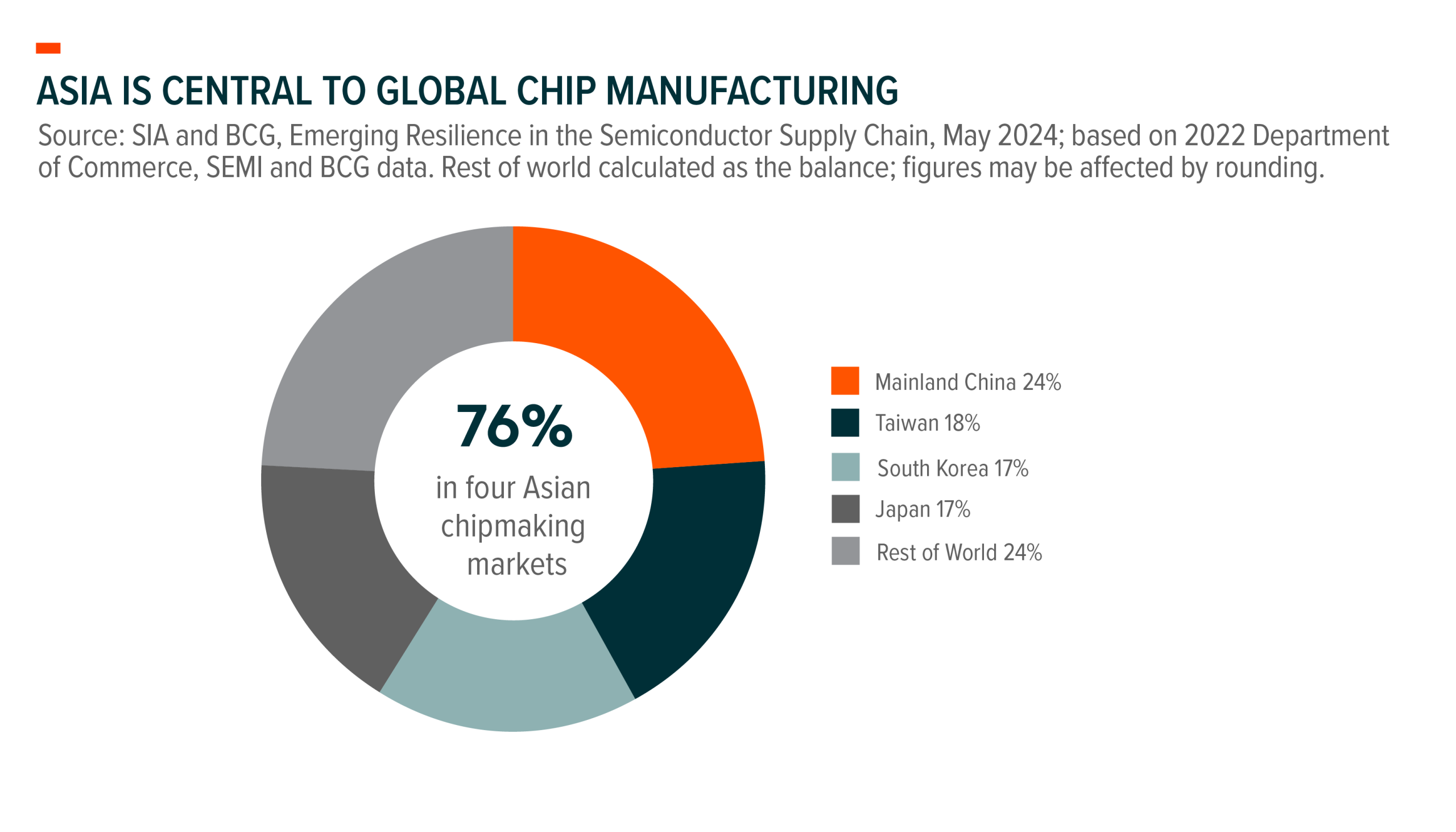
Figure 3. Four Asian markets alone accounted for approximately three-quarters of global commercial fab capacity.
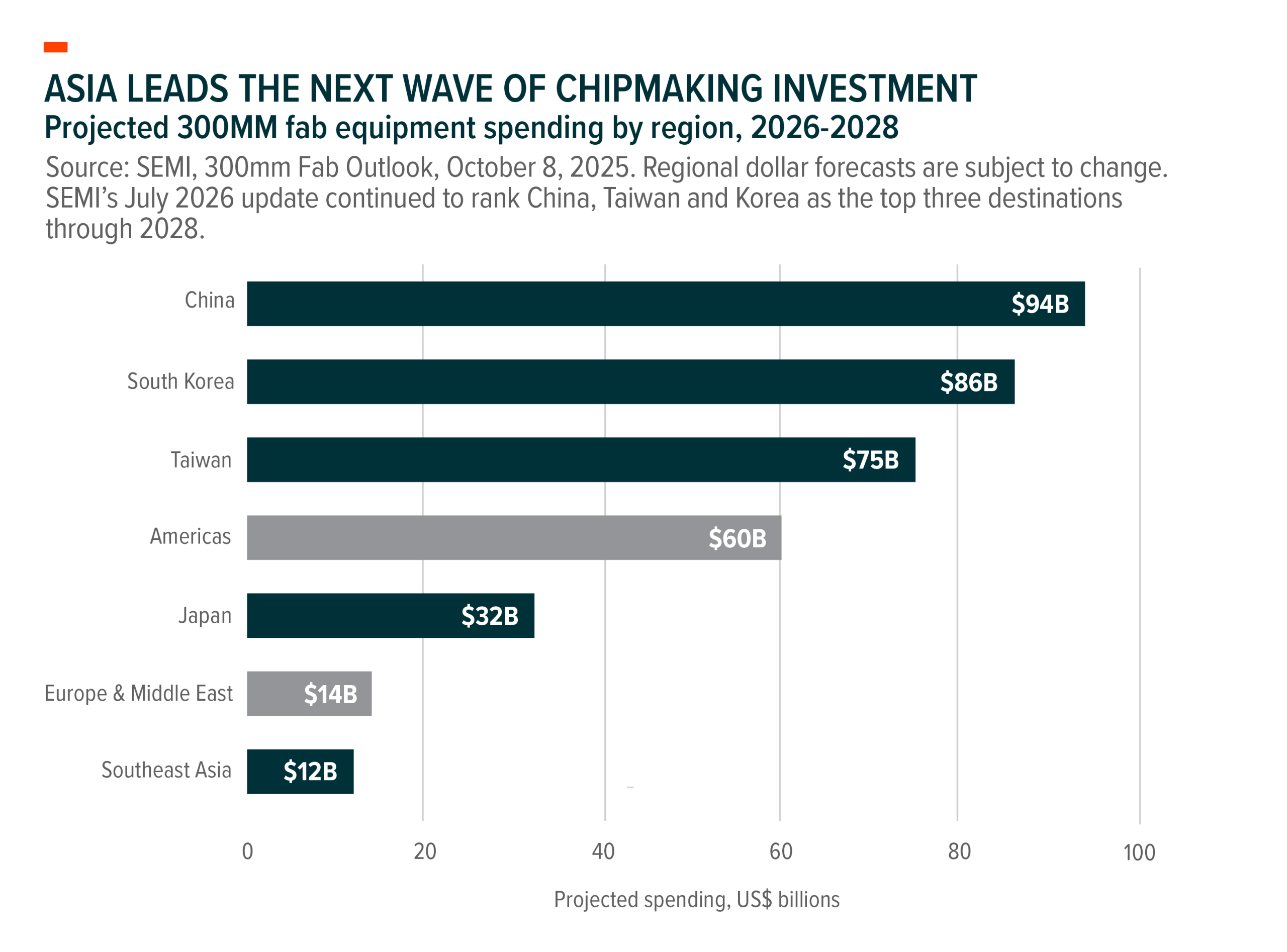
Figure 4. Five Asian regions collectively represented roughly four-fifths of projected spending in SEMI’s regional outlook.
What ACHP provides
The Global X Asia Semiconductor Index ETF (ACHP) is designed to track the Mirae Asset Asia Semiconductor Index. The index selects a maximum of 20 securities from developed and emerging Asian markets involved in semiconductor design, manufacturing, equipment and enabling technologies.
ACHP complements rather than replaces U.S.-focused semiconductor exposure. CHPS targets the U.S. semiconductor ecosystem, while ACHP extends the opportunity into the markets that house many of the foundries, memory producers, equipment manufacturers and other companies responsible for turning chip designs into physical products.
Access the AI Value Chain with Global X
The AI story will not remain fixed. At different points, the constraint may be access to electricity, advanced manufacturing capacity, memory bandwidth, data-centre connectivity or the ability to turn AI into useful applications. A value-chain approach recognizes that demand—and the economics attached to it—can move among these layers.
Global X’s broader lineup includes ETFs providing different levels of exposure across the AI value chain. AIQ provides diversified exposure across the theme, while focused ETFs such as the Global X Artificial Intelligence Infrastructure Index ETF (MTRX), the Global X Artificial Intelligence Semiconductor Index ETF (CHPS), the Global X Asia Semiconductor Index ETF (ACHP), the Global X Artificial Intelligence Memory Index ETF (DRAM), the Global X Big Data & Hardware Index ETF (HBGD), the Global X Robotics & AI Index ETF (RBOT) and the Global X Defence Tech Index ETF (SHLD) target specific segments or applications.
With DRAM and ACHP, that toolkit now reaches more deeply into two of the most important physical foundations of AI: the memory and storage required to keep data moving, and the Asian semiconductor ecosystem .involved in producing a significant share of the semiconductor technology used globally.
Global X organizes the AI buildout into five interconnected layers. Each performs a different job, and progress in one can create demand elsewhere in the chain.
| Layer | Role in the value chain | Global X ETF(s) | |
| 1 | Power the compute | Power generation, data centres and advanced compute infrastructure | MTRX |
| 2 | Build the chips | Semiconductor design, manufacturing and enabling technologies | CHPS, ACHP |
| 3 | Store the data | High-bandwidth memory, DRAM, NAND and storage | DRAM |
| 4 | Manage and move the data | Cloud platforms, networking, connectivity and data systems | HBGD |
| 5 | Apply the intelligence | Software, robotics and real-world AI applications | RBOT, SHLD |
A SINGLE TICKER: AIQ spans the hardware that powers AI (semiconductors, memory and data-centre systems) through to the developers, cloud platforms and applications putting it to work. One holding, the whole chain, from infrastructure to intelligence.
This framework gives Canadians two distinct ways to approach the theme. AIQ offers a broad, one-ticket allocation across multiple parts of the AI ecosystem while the focused ETFs provide more targeted exposure to particular segments or geographies. DRAM and ACHP expand that second set of choices while also broadening the exposures available across the overall suite.
Investment considerations
The growth opportunity does not remove the risks. Semiconductor and memory markets have historically been cyclical, and periods of rapid investment can eventually produce excess capacity or pricing pressure. Both DRAM and ACHP can also be affected by concentration in a limited number of companies or industries, foreign-market and currency exposure, trade restrictions, geopolitical developments and the risks associated with small- and mid-capitalization companies. Investors should consider how a focused thematic allocation fits within a diversified portfolio, their investment objectives, time horizon and their tolerance for volatility.
DISCLAIMERS
Commissions, management fees and expenses all may be associated with an investment in products (the “Global X Funds”) managed by Global X Investments Canada Inc. The Global X Funds are not guaranteed, their values change frequently and past performance may not be repeated. The prospectus contains important detailed information about the Global X Funds. Please read the relevant prospectus before investing.
Mirae Asset Global Index Private Limited (an affiliate of the Manager) owns all rights to the trademark, name and intellectual property associated with the Underlying Indexes of DRAM and ACHP (in this disclaimer, the “Mirae Asset Index”). No representation is made by Mirae Asset Global Index Private Limited that the Mirae Asset Index is accurate or complete or that investment in the Mirae Asset Index or DRAM and ACHP will be profitable or suitable for any person. The Mirae Asset Index is administered and calculated by Mirae Asset Global Index Private Limited and Mirae Asset Global Index Private Limited will have no liability for any error in calculation of the Mirae Asset Index. Mirae Asset Global Index Private Limited does not guarantee that the Mirae Asset Index or its underlying methodology is accurate or complete.
Certain statements may constitute a forward-looking statement, including those identified by the expression “expect” and similar expressions (including grammatical variations thereof). The forward-looking statements are not historical facts but reflect the author’s current expectations regarding future results or events. These forward-looking statements are subject to a number of risks and uncertainties that could cause actual results or events to differ materially from current expectations. These and other factors should be considered carefully and readers should not place undue reliance on such forward-looking statements. These forward-looking statements are made as of the date hereof, and the authors do not undertake to update any forward-looking statement that is contained herein, whether as a result of new information, future events or otherwise, unless required by applicable law.
This communication is intended for informational purposes only and does not constitute an offer to sell or the solicitation of an offer to purchase investment products (the “Global X Funds”) managed by Global X Investments Canada Inc. and is not, and should not be construed as, investment, tax, legal or accounting advice, and should not be relied upon in that regard. Individuals should seek the advice of professionals, as appropriate, regarding any particular investment. Investors should consult their professional advisors prior to implementing any changes to their investment strategies. These investments may not be suitable to the circumstances of an investor.
All comments, opinions and views expressed are generally based on information available as of the date of publication and should not be considered as advice to purchase or to sell mentioned securities. Before making any investment decision, please consult your investment advisor or advisors.
Global X Investments Canada Inc. (“Global X”) is a wholly owned subsidiary of Mirae Asset Global Investments Co., Ltd. (“Mirae Asset”), the Korea-based asset management entity of Mirae Asset Financial Group. Global X is a corporation existing under the laws of Canada and is the manager, investment manager and trustee of the Global X Funds.
© 2026 Global X Investments Canada Inc. All Rights Reserved.
For more information on Global X Investments Canada Inc. and its suite of ETFs, visit http://www.GlobalX.ca
Published September 22, 2026